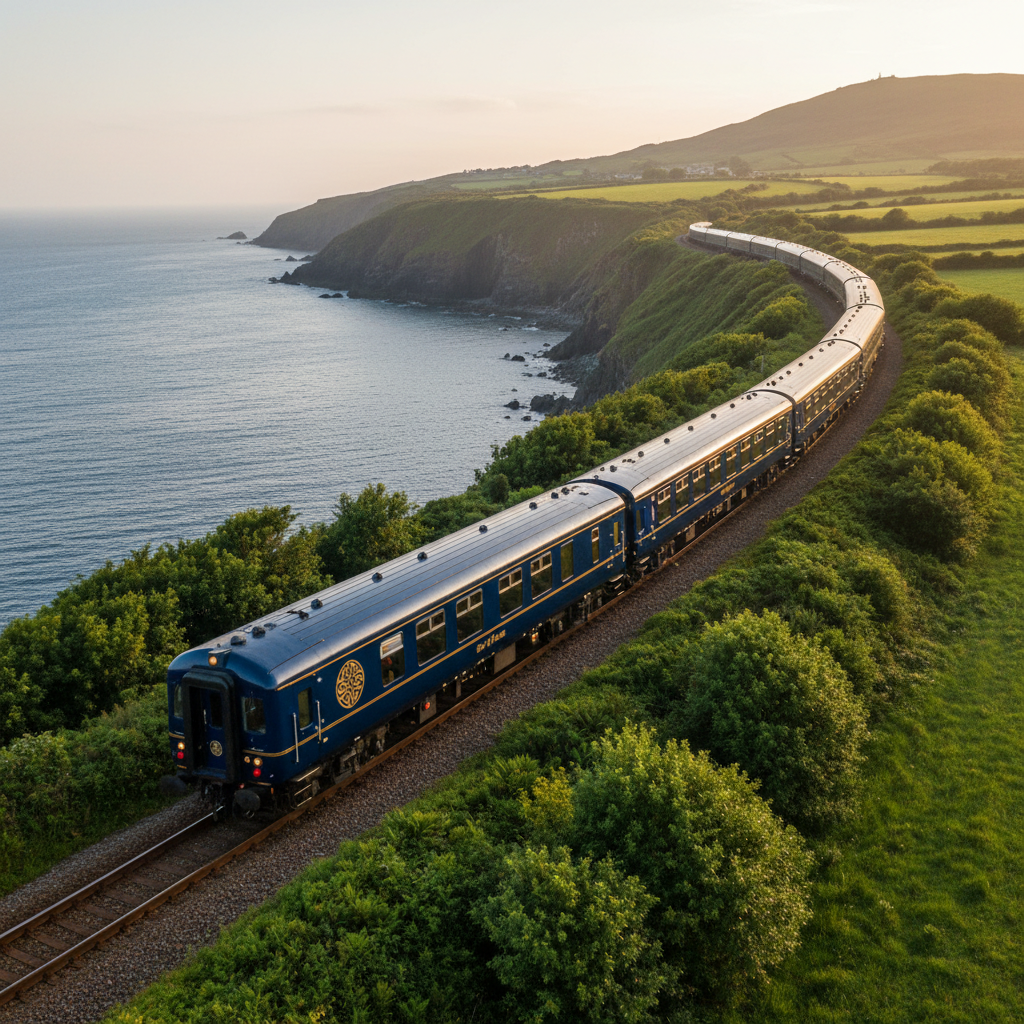
The Belmond Grand Hibernian represented something Ireland had never seen before: a luxury sleeper train that could rival the storied Venice Simplon-Orient-Express. Launched in August 2016 with a €7 million investment in refurbishing vintage carriages, this intimate train accommodated just 40 guests across its ten carriages, creating what Belmond described as a "country house on wheels." The train operated for only three years before ceasing Irish operations on October 14, 2019, making it one of the most exclusive and short-lived luxury travel experiences in recent memory.
What made the Grand Hibernian exceptional was its seamless integration of Ireland's cultural heritage with contemporary luxury. The carriages, originally built between 1980 and 1989 for Córas Iompair Éireann (Ireland's national transport company), were transformed by Mivan, a specialist fit-out company in County Antrim, into spaces that referenced Georgian architecture while providing modern comforts. For travelers seeking exclusive accommodations that tell a story, the Grand Hibernian offered something no hotel could match: a moving journey through Ireland's most dramatic landscapes, with each meal, each excursion, and each evening of traditional music carefully orchestrated to reveal the country's soul.
A Country House on Wheels: The Cabin Experience
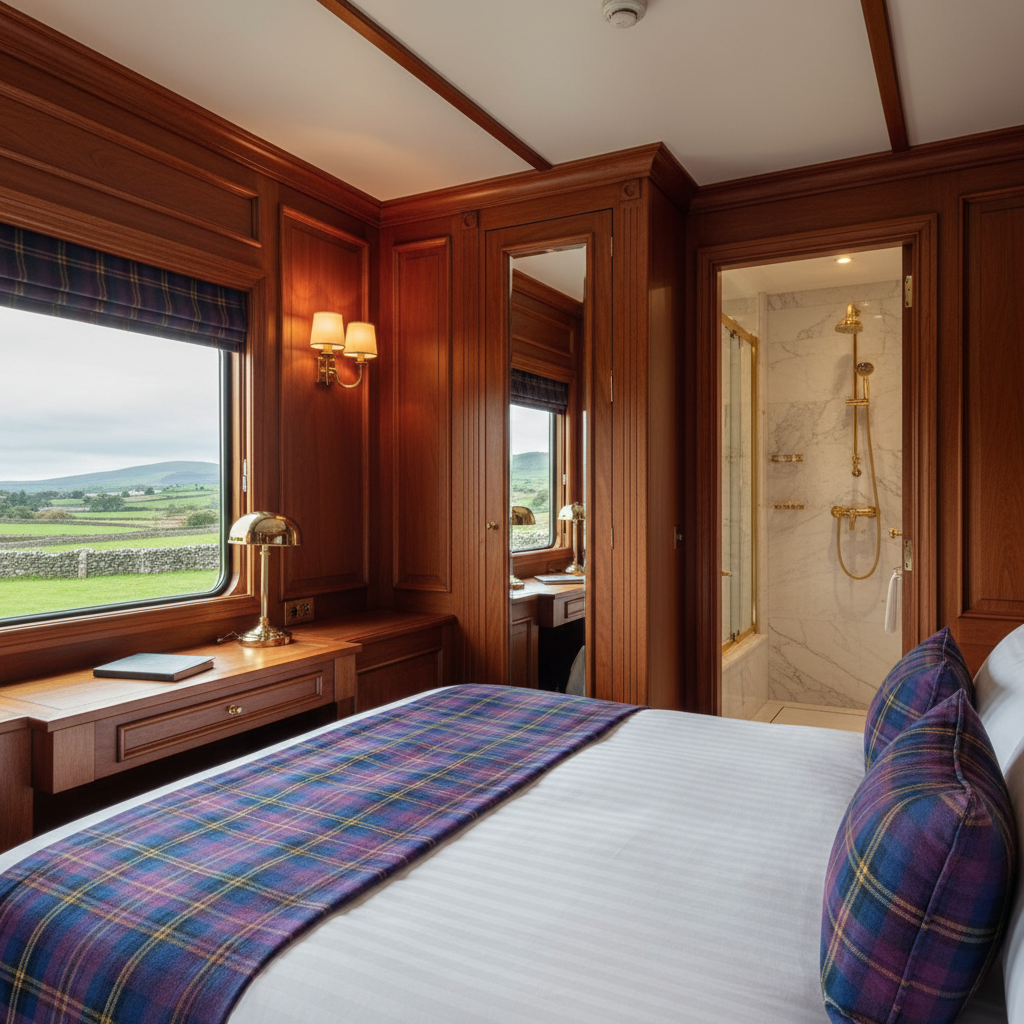
The intimate cabin spaces featured Georgian-inspired design with county-specific tartan details—a testament to the €7 million refurbishment
The Grand Hibernian offered 20 cabins in total: 16 twin configurations and four doubles, each featuring private en-suite facilities—a remarkable engineering achievement for carriages originally designed for standard rail service. Every cabin included a private shower room, wardrobe, writing desk, and large picture windows that framed Ireland's passing landscapes like living paintings. The interior design, led by James Park Associates, drew direct inspiration from Ireland's Georgian architectural heritage, creating spaces that felt both historically grounded and comfortably contemporary.
The attention to regional identity distinguished these cabins from other luxury train accommodations. Each of the five sleeper carriages bore the name of an Irish county—Kerry, Down, Leitrim, and Waterford—with interior decor reflecting that county's traditional tartan patterns. Kerry's cabins featured rich purples, Down was adorned in warm oranges, Leitrim embraced deep reds, and Waterford showcased elegant blues. This wasn't mere decoration; it was a deliberate strategy to immerse guests in Ireland's cultural tapestry from the moment they stepped aboard.
For travelers accustomed to five-star all-inclusive experiences, the Grand Hibernian's cabin experience offered something different: intimacy at scale. With only 40 guests maximum, the staff-to-guest ratio allowed for genuinely personalized service. The compact but intelligently designed spaces meant that every element served a purpose, and the gentle rhythm of the train created a meditative quality that static luxury hotels cannot replicate.
Immersive Journeys Through the Emerald Isle
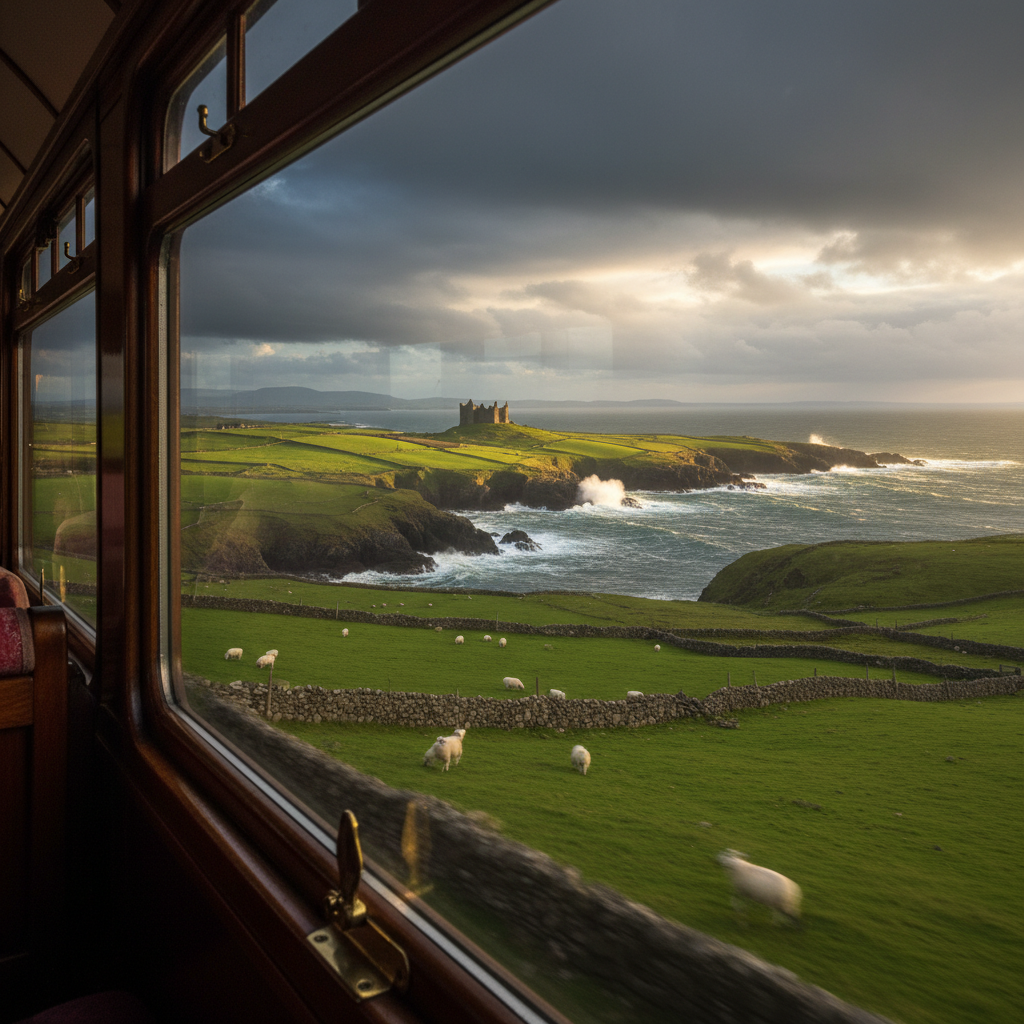
The dramatic Irish landscape unfolded continuously through the train's panoramic windows, offering ever-changing views of coastal cliffs and verdant countryside
The Grand Hibernian operated several carefully curated itineraries, all departing from Dublin's historic Heuston Station. Guests could choose from two, four, and six-night journeys, each designed to showcase distinct aspects of Ireland's geography and culture. The train's route network was unique in luxury rail travel: it traversed both the Republic of Ireland and Northern Ireland, crossing the border seamlessly and offering perspectives on the entire island that few visitors ever experience.
The "Taste of Ireland" journey focused on the country's culinary renaissance, while "Legends and Loughs" explored the mythological landscapes of the west and north. What distinguished these itineraries from standard touring was the philosophy of slow travel that Belmond championed. Rather than rushing between destinations, the train's pace allowed guests to absorb the landscape—the way morning light played across Connemara's bogs, the sudden drama of the Atlantic coast appearing beyond a bend, the gentle pastoral scenes of the midlands that most travelers overlook entirely.
This approach to travel resonates with the growing demand for bespoke travel experiences that prioritize depth over breadth. The Grand Hibernian understood that luxury isn't about covering the most ground—it's about experiencing places in ways that create lasting memories. The train's schedule built in time for spontaneity: an unexpected stop at a scenic overlook, an extended conversation with a local historian, an impromptu session of traditional music that stretched into the evening.
Culinary Excellence and Social Spaces
The Sligo dining car's Georgian-style elegance provided the setting for menus that rivaled Dublin's finest restaurants
The culinary program aboard the Grand Hibernian was designed to rival Dublin's best restaurants—a bold claim that the train consistently delivered on. Two dining carriages, "Sligo" and "Wexford," offered distinct atmospheres: Sligo featured Georgian-style elegance with rich wood paneling and formal table settings, while Wexford presented an airier, more contemporary space adorned with traditional Irish tweeds. The all-inclusive ticket covered every meal and beverage, from morning coffee to late-night whiskey.
The menus changed based on the regions the train traversed, featuring ingredients sourced directly from local producers along the route. Guests might begin a meal with Galway oysters, freshly harvested from the cold Atlantic waters, followed by Connemara Hill Lamb prepared with herbs gathered from the surrounding mountains. Gubbeen cheese from West Cork appeared on cheese boards, while seafood from the coastal towns the train passed through featured prominently in evening menus. This farm-to-table approach, executed on a moving train, demonstrated remarkable logistical sophistication.
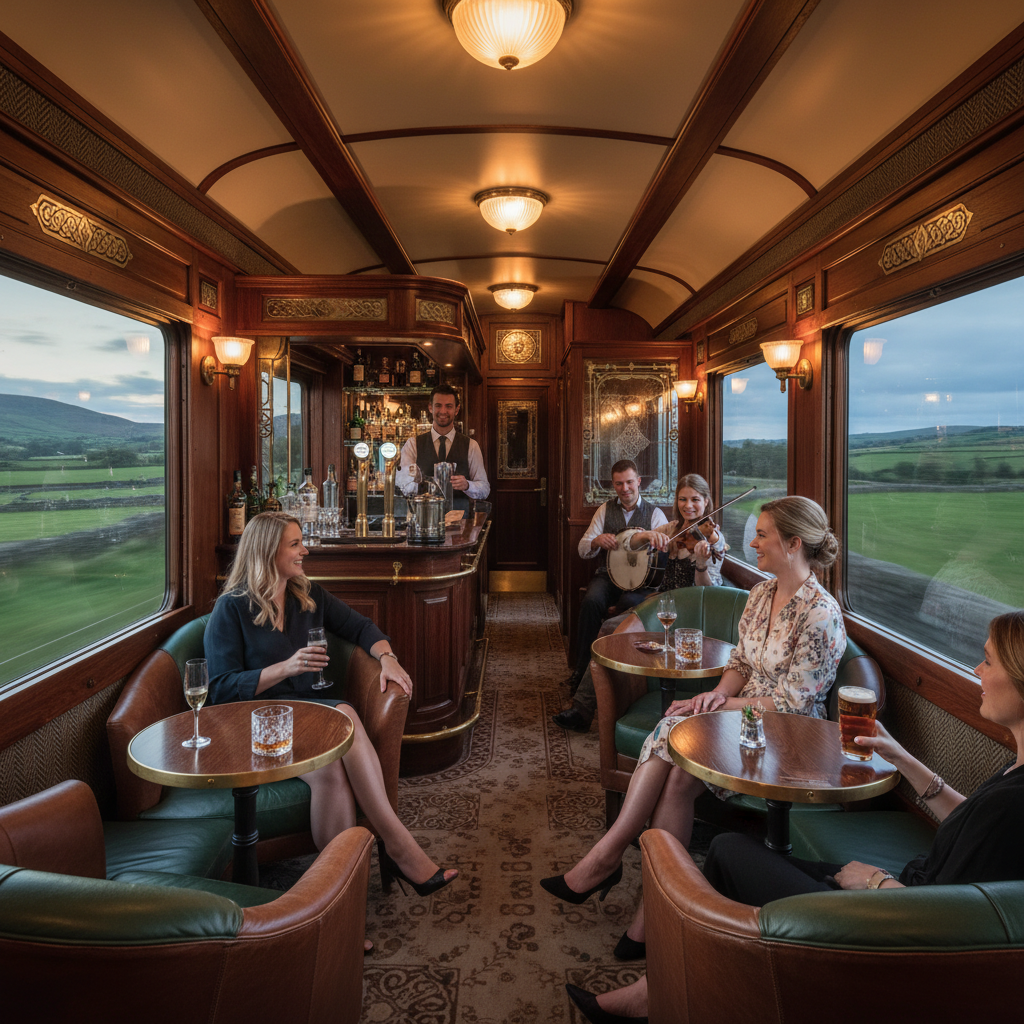
The observation car "Kildare" served as the social heart of the train, designed to evoke a traditional Dublin saloon. Here, guests gathered in the evenings for pints of Guinness, glasses of Irish whiskey, and sessions of live traditional music. Local musicians would board at various stops, bringing the authentic sounds of Irish folk tradition into the intimate space. The large windows allowed the passing landscape to serve as a backdrop to these gatherings, creating an atmosphere that blended conviviality with contemplation.
For those who appreciate the intersection of gastronomy and travel that defines experiences like luxury wellness retreats, the Grand Hibernian offered a different but equally compelling proposition: nourishment as cultural immersion, where every dish told a story about the land it came from.
Exclusive Excursions and Cultural Immersion
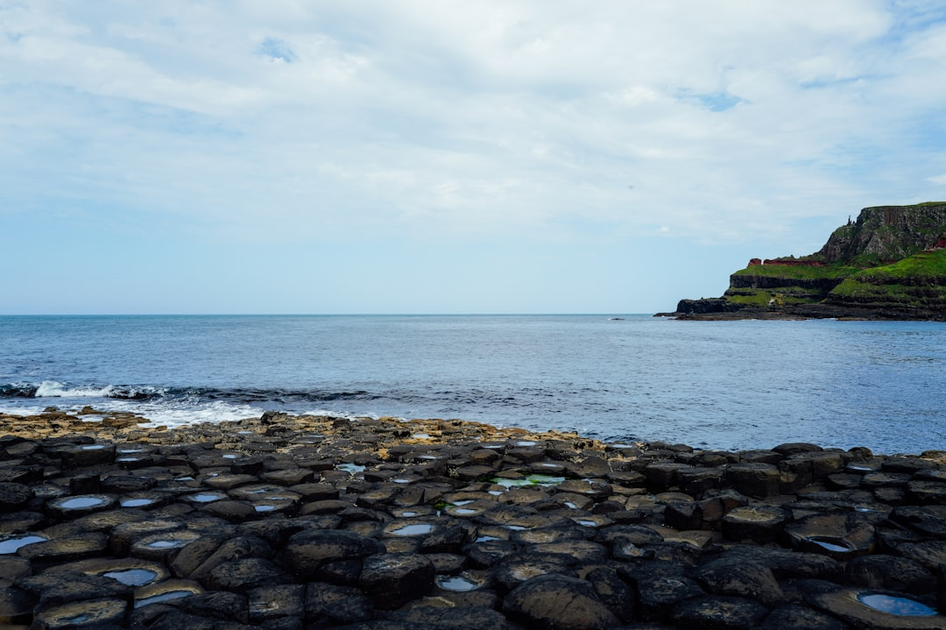
The Giant's Causeway—one of the exclusive excursion destinations that showcased Ireland's natural wonders to Grand Hibernian guests
The excursion program distinguished the Grand Hibernian from other luxury train experiences. Rather than simply offering scenic rail travel, Belmond created comprehensive journeys that integrated off-train experiences seamlessly into the itinerary. The Giant's Causeway, with its otherworldly basalt columns, featured on northern routes, offering guests private guided tours of the UNESCO World Heritage site. Historic castles throughout Ireland opened their doors for exclusive visits, often including private tours with local historians who could illuminate centuries of Irish history.
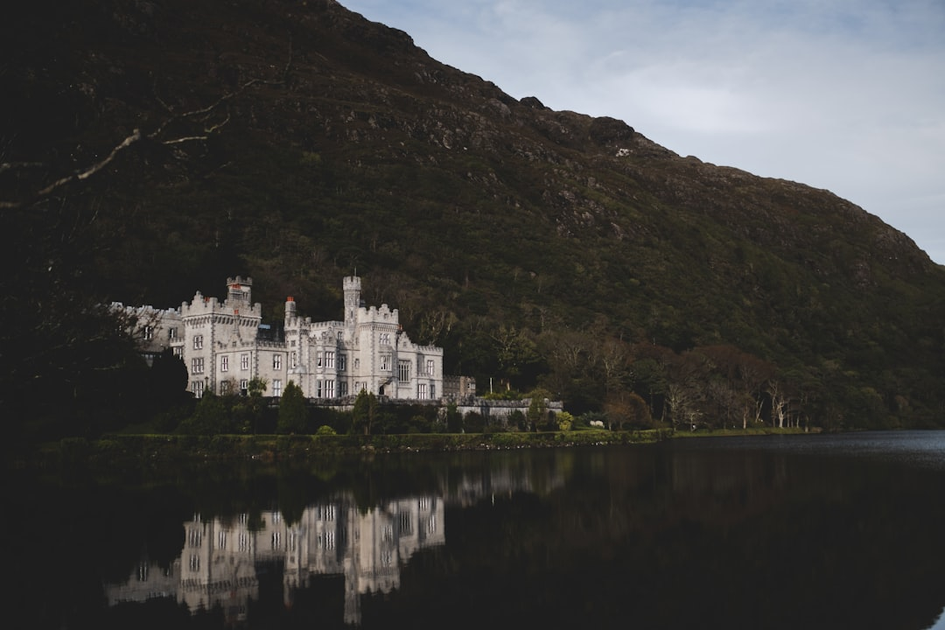
Traditional jaunting car rides to historic castles offered an authentic Irish experience unavailable to ordinary tourists
Ireland's whiskey renaissance was well represented in the excursion program. Guests visited renowned distilleries, learning about the craft of Irish whiskey-making from master distillers and enjoying tastings of rare expressions unavailable elsewhere. These weren't standard tourist visits—the Grand Hibernian's relationship with these producers ensured access to production areas and private tasting rooms typically closed to the public.
The experiential elements extended beyond the expected. Traditional jaunting car rides transported guests to Ross Castle in Killarney, the horse-drawn carriages clip-clopping along routes that have remained unchanged for centuries. Sheepdog demonstrations at working farms revealed the agricultural traditions that shaped Irish culture, while visits to the Waterford Crystal factory showcased the country's artisanal heritage. Cork received guests with private walking tours led by local historians who could bring the city's complex history to life.
This approach to excursion planning reflects the broader trend in bespoke travel agency services, where the goal is not simply to show guests famous sites but to create genuine connections with places and their people. The Grand Hibernian understood that luxury travelers increasingly seek transformative experiences—moments of authentic cultural exchange that no amount of money can buy without careful planning and local relationships.
The Technical and Design Marvel
The transformation of 1980s-era Mark 3 carriages into a luxury sleeper train represented one of the most ambitious rail refurbishment projects in European history. Belmond's €7 million investment covered not just aesthetic improvements but fundamental engineering challenges: installing en-suite bathrooms in carriages never designed for them, upgrading electrical systems to support modern amenities, and reinforcing structures to meet contemporary safety standards while preserving the character of the original vehicles.
Mivan, the County Antrim-based specialist fit-out company that executed the transformation, brought expertise from luxury yacht and aircraft interiors to the project. The challenge was creating spaces that felt spacious and luxurious within the dimensional constraints of rail carriages—a task that required innovative storage solutions, careful material selection, and precise attention to weight distribution. Every element, from the custom-built furniture to the bathroom fixtures, was designed specifically for this train.
The exterior design made an equally strong statement. The distinctive midnight-blue livery, adorned with Celtic knot emblems on each carriage, created an immediately recognizable presence on Irish railways. A dedicated locomotive from the IE 201 Class, number 216 "River Dodder," was specially overhauled and painted in matching livery to pull the train. This attention to visual coherence—from locomotive to observation car—reflected Belmond's understanding that luxury is experienced in totality, not in isolated moments.
The design philosophy drew heavily on Ireland's Georgian architectural heritage, a period that represents the country's most refined aesthetic tradition. James Park Associates, the interior design firm, studied Georgian townhouses in Dublin and country estates throughout Ireland, translating their proportions, color palettes, and decorative motifs into a railway context. The result was spaces that felt authentically Irish while meeting the expectations of international travelers accustomed to the world's finest accommodations.
Legacy and the Britannic Explorer
The Grand Hibernian's cessation of Irish operations on October 14, 2019, marked the end of a brief but significant chapter in luxury travel history. Belmond cited the economic impact of the COVID-19 pandemic as the reason for relocating the train to mainland Europe, where they identified increasing demand for immersive, slow-travel experiences. The carriages were transferred to England and underwent a complete redesign, emerging as the Britannic Explorer, which began service in July 2025.
For those who experienced the Grand Hibernian during its three years of operation, the journey remains a cherished memory. Travel vlogger Kayla Limage documented her experience extensively, highlighting the meticulous attention to detail that defined every aspect of the journey—from the luxurious cabin appointments to the high-end dining and curated excursions. Her account captures the exceptional service quality and the unique opportunity to see Ireland in a way that was both intimate and grand.
The Grand Hibernian's story offers lessons for the luxury travel industry. Its success demonstrated that there is substantial appetite for slow, immersive travel experiences that prioritize depth over breadth. Its challenges—including the logistical complexities of operating a luxury train in a country with limited rail infrastructure—reveal the difficulties of bringing such experiences to market. And its ultimate relocation reminds us that even the most exceptional travel experiences can be ephemeral, making them all the more precious to those who experience them.
For travelers interested in similar experiences, Belmond continues to operate the Venice Simplon-Orient-Express and other luxury trains worldwide. The company's commitment to rail travel as a form of luxury hospitality remains strong, and the lessons learned from the Grand Hibernian have informed their subsequent projects. Meanwhile, Ireland awaits a successor—a new venture that might one day restore luxury rail travel to the Emerald Isle.
A Journey Worth Remembering
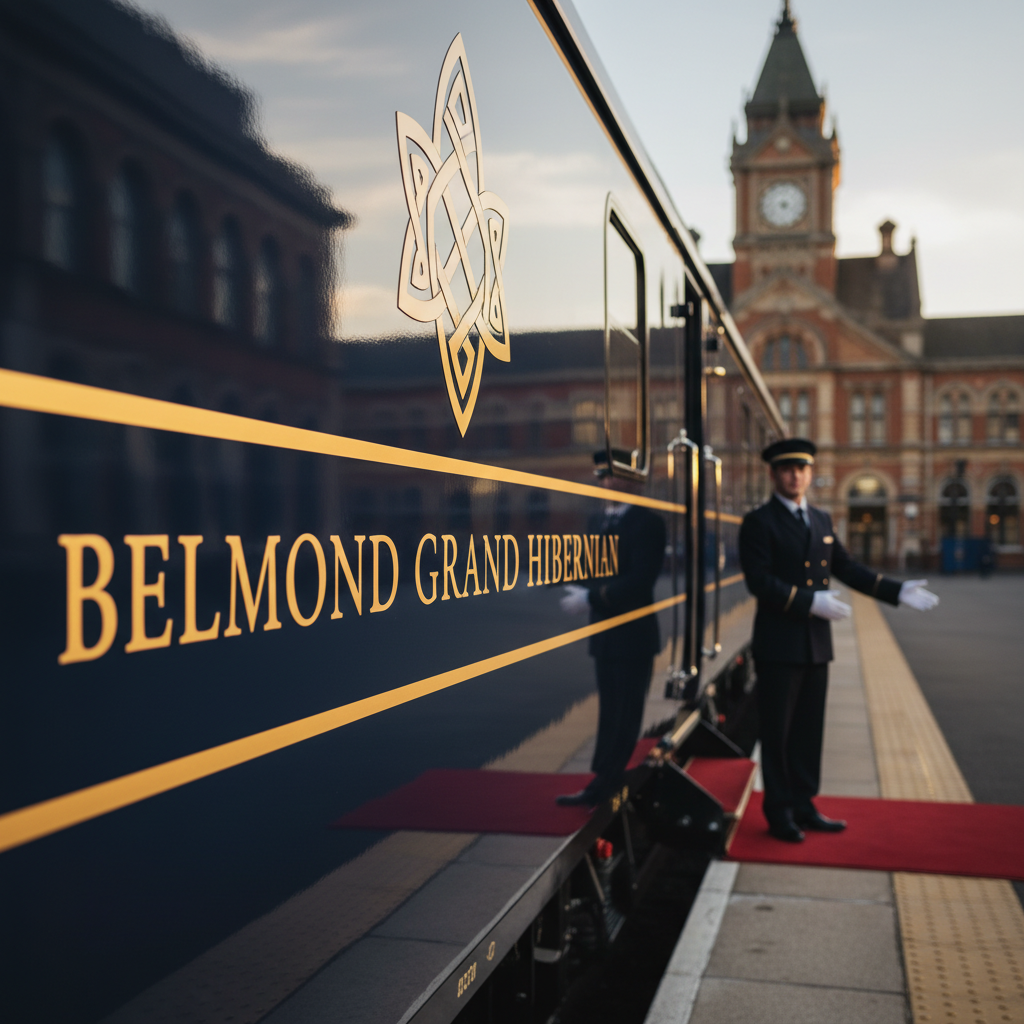
The elegant exterior at Dublin Heuston Station—a scene that travelers will not witness again on Irish soil
The Belmond Grand Hibernian represented the pinnacle of what luxury rail travel could achieve: not merely transportation, but transformation. Its €7 million investment in refurbishing vintage carriages, its meticulous attention to Irish cultural heritage, and its carefully curated excursions created an experience that no other form of travel could replicate. For 40 guests at a time, the train offered something increasingly rare in our hyperconnected world—the opportunity to slow down, to watch landscapes unfold at a human pace, and to connect with a country's soul through its food, its music, and its stories.
The train's departure from Ireland reminds us that luxury travel experiences can be as fleeting as they are precious. Those who journeyed aboard the Grand Hibernian carry memories of Georgian-inspired cabins, of Connemara lamb served in elegant dining cars, of traditional music sessions in the observation car as the Irish countryside rolled past the windows. These experiences cannot be recreated, only remembered.
For travelers seeking similar experiences today, the journey continues elsewhere—aboard the Britannic Explorer in England, the Venice Simplon-Orient-Express across Europe, or the many other luxury trains that Belmond and its competitors operate worldwide. And perhaps, one day, Ireland will welcome another luxury train to its railways. Until then, the Grand Hibernian's legacy endures as a reminder of what is possible when hospitality, design, and cultural sensitivity converge on the rails.
References
- Luxury Travel Magazine Australia - Belmond Grand Hibernian Coverage
- Irish Railway Record Society - Grand Hibernian Technical Details
- Mivan - Luxury Train Fit-Out Project Details
- CLAD Global - Design and Architecture Features
- North South Travel - Itinerary and Experience Details
- The Irish Times - Grand Hibernian Launch and Operations
Continue Your Luxury Journey
Discover more exceptional accommodations and travel experiences curated for discerning travelers.
Exclusive Resorts & Accommodations
Explore our complete collection of luxury properties, from private islands to historic estates.
Aman Resorts Collection
Inside the world's most exclusive luxury hotel collection and their philosophy of space and serenity.
Private Island Resorts
The ultimate in seclusion and luxury—discover exclusive island retreats around the world.
Curating Your Perfect Journey
A strategic approach to planning luxury travel experiences that exceed expectations.